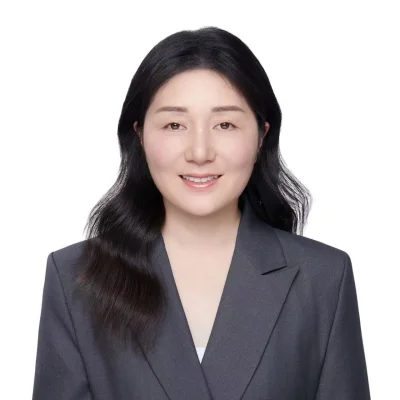
💡 律咖编者按: 本文由律咖网社群读者 Jinlongshi 投稿分享。 为了方便大家阅读,律咖网编辑 JingJing(微信:lvga2015)对原文进行了细致的逻辑润色与合规性整理。希望能给正在 巴西 创业路上的你带来真实的参考。


I never thought I’d be writing about trade safeguards while sitting in a café in Florianópolis, sipping a café com leite and staring at my laptop screen, wondering if the factory I’m trying to partner with in Santa Catarina will even survive the next twelve months.

I’m Jinlongshi — 25, from Shulan, Jilin. I graduated from Northeast Normal University with a degree in cross-border e-commerce. I’ve been in the solar backsheet business for three years now. My goal? To find a stable, reliable manufacturing partner in Brazil — not just to export, but to localize. To build something that lasts.

And lately, the word “safeguards” keeps coming up.

Not the kind you wear on your knees. I mean Safeguard Measures under Brazil’s Free Trade Agreements — the legal tools that can suddenly raise tariffs, limit imports, or trigger investigations if local industries feel “threatened.” I didn’t know this term existed until I started talking to a local lawyer in Blumenau. And honestly? I wish I’d known sooner.


The Background: Why Santa Catarina?

Santa Catarina is one of Brazil’s most industrialized states. It’s got strong logistics, a skilled workforce, and a history of welcoming foreign investment — especially in electronics, machinery, and renewable energy components. That’s why I came here. My solar backsheet material — a polymer film that protects the rear side of photovoltaic panels — is in demand. Brazil’s solar market grew over 30% last year, and according to the Ministry of Development, Industry, Trade and Services, 29,818 companies exported in 2025, the highest number since records began.

That’s encouraging.

But here’s the thing: Brazil doesn’t have a blanket free trade agreement with China. It has bilateral trade frameworks with Mercosur members, and it participates in broader regional accords. So when I asked about import duties on my backsheet material, the answer wasn’t simple.

I was told: “It depends on whether your product is classified as ‘similar’ to a locally produced good.”

That’s when I first heard “safeguard clause.”


The Variables: What “Safeguards” Might Actually Mean

I spent weeks trying to understand this. I read Brazilian customs codes. I talked to three different import agents. I even attended a small session at the Congress Brazil Mobile & Expo 2026 (yes, I went — it was mostly about mobile tech, but one booth had a trade lawyer who took pity on me).

What I learned:

  • Safeguard measures are temporary — usually up to four years, renewable once.
  • They’re triggered if imports surge and cause or threaten serious injury to a domestic industry.
  • The process is initiated by a local industry petition, reviewed by the Secretariat of Foreign Trade (SECEX), and approved by the Câmara de Comércio Exterior (Camex).
  • It’s not about “unfair trade” like anti-dumping — it’s about volume and market disruption.

Here’s the scary part: I don’t know if my product is considered a threat.

I’m shipping a polymer film. It’s not made in Brazil yet. But if someone starts making it locally next year — and then claims my imports are flooding the market — I could suddenly face a 25% tariff hike. Or worse: a quota.

I didn’t realize how much I was flying blind.

That’s the information asymmetry I didn’t expect: You think you’re just importing a component. But the system sees you as a potential disruptor — even if you’re not trying to be.


My Framework: Thinking Like a Local, Not Just a Supplier

I used to think: If I get the price right, I’ll win.

Now I think: If I understand the rules before I play, I might not lose.

Here’s how I’m reframing my approach now:

  1. Product Classification Matters More Than Price
    I spent three days with a customs broker trying to get the correct NCM (Nomenclatura Mercosul) code for my backsheet. One digit off — and you’re classified under a different tariff bracket. One that might already be under safeguard review.

  2. Timing Is Everything
    Brazil’s trade review cycle is slow. Investigations can take 6–12 months. But if you’re already shipping, you’re exposed. I’m now delaying my next shipment by two months — not because I’m scared, but because I want to wait for the next Camex meeting cycle. I’d rather pay slightly higher shipping than risk being caught in a sudden duty change.

  3. Build Relationships, Not Just Contracts
    I met a local solar panel manufacturer in Criciúma. We had coffee. I didn’t pitch. I asked: “Have you ever had to file for safeguard protection?”
    He laughed. “No. But we’ve watched what happened to the Chinese LED companies in 2020.”
    That conversation was worth more than any contract draft.


What I Wish I’d Known Sooner

I used to think legal compliance was about paperwork.

It’s not.

It’s about listening.

I spent too much time optimizing shipping routes and not enough time understanding who’s watching me.

There’s a small group of Brazilian solar component producers — mostly in Santa Catarina and São Paulo — who’ve been lobbying for years to protect their domestic market. I didn’t know their names. I didn’t know their concerns. I thought I was just selling a product.

Now I realize: I’m part of a larger economic story.

And if I don’t understand the plot, I might get written out of it.


❓ FAQ: Practical Steps for Solar Component Suppliers in Brazil

Q1: How do I check if my solar backsheet product is under any current safeguard measure in Brazil?

Steps:

  1. Go to the official SECEX portal: https://www.gov.br/mdic/pt-br
  2. Navigate to “Comércio Exterior” → “Medidas de Salvaguarda”
  3. Search by NCM code (e.g., 3919.90.90 for polymer films)
  4. Cross-check with the latest Camex resolutions (published monthly)

Key Points:

  • Safeguard measures are temporary and publicly listed.
  • If no measure exists now, it doesn’t mean one won’t be proposed next year.
  • Always verify the NCM code with a Brazilian customs broker — misclassification is common.

Q2: Can I apply for an exemption if I’m a small supplier?

Steps:

  1. Identify if the safeguard applies to your exact product classification.
  2. Contact the local trade association (e.g., ABISOLAR) — they sometimes facilitate dialogue.
  3. Submit a formal request via SECEX’s public consultation window — usually open for 30–45 days after a safeguard proposal is announced.

Key Points:

  • Exemptions are rare but possible if you prove your product is not domestically produced or is essential for downstream manufacturing.
  • Documentation must include technical specs, supply chain details, and proof of non-substitutability.
  • You’ll need a local legal representative — you can’t file this yourself from abroad.

Q3: What’s the best way to avoid being caught off guard by future safeguard actions?

Steps:

  1. Subscribe to SECEX’s monthly “Boletim de Comércio Exterior.”
  2. Attend trade fairs like Congress Brazil Mobile & Expo 2026 — even if it’s not your niche, you’ll meet local industry reps.
  3. Build a relationship with one local supplier or manufacturer. Ask them: “What’s the one thing you wish foreign suppliers knew?”

Key Points:

  • Local networks are your early warning system.
  • Don’t wait for a tariff hike to start asking questions.
  • Patience here isn’t weakness — it’s strategy.

My Reflection

I used to think the hardest part of doing business in Brazil was the bureaucracy.

It’s not.

It’s the silence.

The silence between the official documents and the real conversations.
The silence when no one tells you that your product might be seen as a threat.
The silence after you’ve shipped your first container, and you realize you don’t know who’s watching.

I miss the clarity of e-commerce platforms — where the rules are written in black and white.

Here, the rules are written in meetings, in coffee, in half-finished sentences over lunch.

I’m learning to listen.


Four Actions I’m Taking Now

  1. I’ve hired a local trade compliance consultant — not for legal advice, but to help me read the tea leaves. They know which industries are lobbying, which NCM codes are being reviewed, and who to talk to.
  2. I’m delaying my next shipment by two months — to align with the next Camex review cycle. I’d rather wait than risk a surprise.
  3. I’m visiting one local solar manufacturer per month — just to listen. Not to sell. To understand.
  4. I’m keeping a simple log — every time I hear “safeguard,” I write it down. Date. Person. Context. I don’t know if it’ll help, but I know I’ll regret it if I don’t.

Final Thought: It’s Not About Speed. It’s About Trust.

I’m not trying to “break into” the Brazilian market.

I’m trying to earn a seat at the table.

And that means showing up — not with the lowest price, but with the most respect.

I’ve met people here who’ve been in this business for 20 years. They don’t care about my startup story. They care if I’m honest. If I’m patient. If I’m willing to learn.

I’m still learning.

And I’m grateful for every person who took the time to tell me something I didn’t know.


✨ If You’re Also in Brazil — Let’s Talk

I don’t know if I’ll get this right.

But I know I won’t get it right alone.

If you’re a Chinese supplier in Santa Catarina, or anywhere else in Brazil, trying to make sense of trade safeguards, free trade frameworks, or just trying to find a factory that won’t vanish next month — I’d love to hear from you.

I’ve been there.

And if you want to share your story, or just ask a quiet question — JingJing from Lvga.com is someone I trust.

She doesn’t promise results.

But she listens.

And if you’re thinking about your next step — you can reach her at wechat: lvga2015.

No pitch. No pressure. Just a quiet space to talk.


🔗 延伸阅读

🔸 Brazil sees record number of exporters
🗞️ 来源: The Star – 📅 2026-03-09
🔗 阅读原文

🔸 Congress Brazil Mobile & Expo 2026 abre credenciamento
🗞️ 来源: Valor Econômico – 📅 2026-03-09
🔗 阅读原文

🔸 Neymar injury doubt casts shadow over Brazil recall hopes
🗞️ 来源: Channel NewsAsia – 📅 2026-03-09
🔗 阅读原文


📌 免责声明

请知悉:律咖网(Lvga.com)是跨境创业公开信息与内容分享平台,不提供法律、税务、会计或合规服务。
本文内容基于公开资料,并由人工编辑与 AI 工具协助整理,仅供信息参考之用,不构成任何法律、投资、移民或商业决策建议。
政策可能随时间变化,请以官方渠道与当地持牌专业人士意见为准。
如内容有需要修订之处,欢迎随时与我联系。